
 Previous
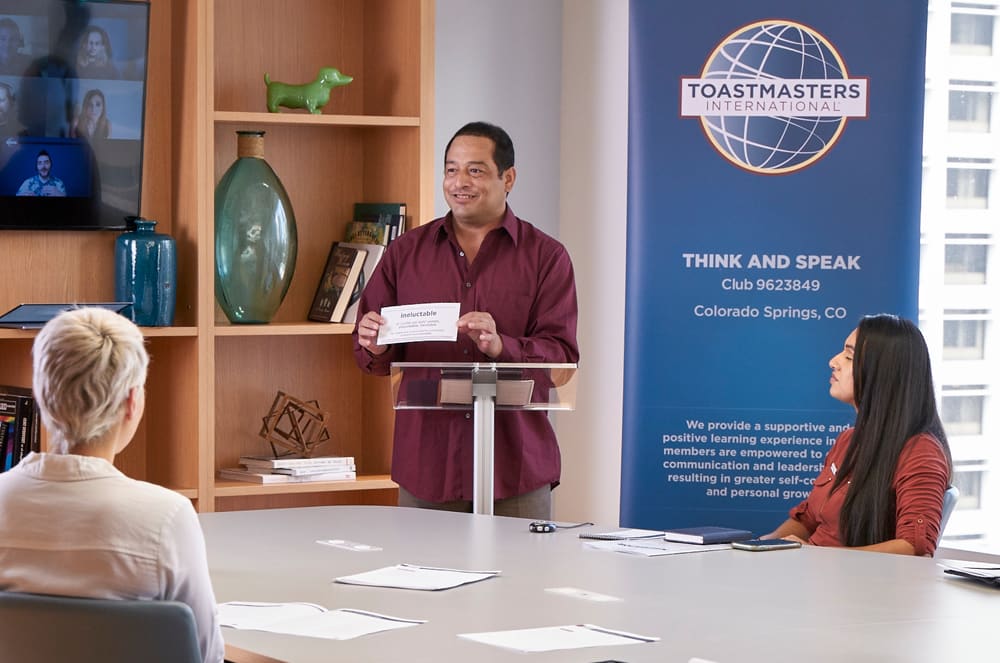
Toastmasters clubs come in all shapes and sizes: Some are big, and some are small. Some are formal, and others are more casual. Some meet weekly, and others meet monthly. They might be community clubs, corporate clubs, specialty clubs, or advanced clubs. They might meet in person, online, or both. No personality or method is better than another because there is no difference in what members can learn and how they can grow.
The quality that does make a difference, however, is the strength of the club. We all join Toastmasters for our own reasons. We have our own goals, and the strength of a club can go a long way toward determining exactly how well we achieve those objectives.
Qualities of a Strong Club
Strong Toastmasters clubs often share similar characteristics. For example, a strong club usually includes members who are striving to be excellent speakers. This shows newer members what is possible and sets a high bar for everyone.
There is also strong progression toward members’ goals, which you can measure by how many members are advancing through their Pathways path. This advancement means the members are speaking frequently, which yields confident speakers. You also see members willing to step up and take on leadership positions.
Strong clubs typically have good energy as well, which makes meetings fun. These meetings are more like events that are not only high energy, but are also tightly run, keeping to an agenda and respecting the members’ time.
The strength of a club can go a long way toward determining exactly how well members achieve their objectives.
Qualities to Watch Out For
Now what about those clubs that are, perhaps, not as strong? They have some common characteristics, too.
In a club that isn’t as strong, there is often no real growth in speaking or leadership skills among members. They may speak at meetings, but they may not be putting much effort into preparation. Some speeches are written the night before or not practiced at all.
Additionally, many times the leaders don’t have a strong Toastmasters vision. They aren’t as familiar with what Toastmasters International has available in terms of services and resources, as well as the club’s growth potential. This can result in members becoming stagnant. A club like this can have a stable membership, but new members are rare or non-existent. This results in the club just coasting.
Unfortunately, this can happen to any club. A club may have started strong, but, over time, it can lose momentum. If your club is good today, it can move toward stagnation over time. Which is why you need to work at staying strong.
How to Become Strong Again
All too often weaker clubs don’t realize their situation. They think they are strong, but they often need outside help.
Cue the Area Director and club coach. Area Directors visit clubs and work with members to brainstorm solutions to problems and offer resources. Club coaches are experienced Toastmasters who work with members to rebuild their membership and improve club quality.
Another step you can take to strengthen your club is identifying the leaders and motivated members of your club. These members may not be club officers, but they are often active participants in meetings and are working through Pathways. Encourage them to set a good example that others will want to follow. All members should be studying the education materials and striving to master the principles, and if some are using it effectively, hopefully others will follow.
As a club, you should also attend local events. If an expert speaker, particularly a World Champion or Accredited Speaker, is speaking at an event, make sure you attend with fellow club members. And plug into District functions. Learn what tools and support are available.
And finally, for all clubs, do the basics that make a difference. Create your agenda early. Fill all roles before the meeting starts. Come prepared, whether it is for a speech, an evaluation, or a word of the day. And come prepared to have some fun.
Tips to Keep Your Club Strong
Once you have strengthened your club—or if your club was already going strong—continue to focus on growing. Being in a strong club doesn’t mean you can sit back and relax. Every club can get better. The danger to a strong club is thinking you have arrived.
To keep your club strong, there are two areas where you can continue to grow. First, keep members focused on improving their speaking skills.
Encourage members to work through Pathways. As a club, expect high quality in each member’s speech writing and speech delivery. Hold each other accountable. Seek to write better speeches. Learn how to employ effective rhetorical devices. Become awesome in your vocal variety.
Identify key experts, even outside of your District, and learn from them as well. A pivotal point in my speaking came when I attended a meeting with one of the World Champions of Public Speaking, who gave a very thorough evaluation of an advanced speech. I went into that meeting thinking I was a good speaker. Boy, was I wrong. Midway through, I realized how much more I could grow and I started seeking out high-level resources. That should be a common practice for advanced members.
A second area for growth is stretching members’ leadership skills. Recruit members to lead events, such as speech contests and other Area, Division, and District events. Give them a greater challenge than a club leadership role.
You should also identify emerging leaders in your club and connect them to mentors for additional support.
Reach higher. There is always room to grow.
So how would you rate your club? Are you moving forward? Are your members achieving their goals? Are they striving to get better? Are they fully engaged in the Toastmasters program?
Momentum is critical in a club. If a club has strong momentum, it will grow. If not, it will struggle. Take action to build that forward momentum by encouraging every member to excel.
What will you achieve this coming year? Aim high—and go for it!

Share this article


Bill Brown, DTM is a speech delivery coach in Gillette, Wyoming. He is a member of Energy Capital Toastmasters in Gillette. Learn more at billbrownspeechcoach.com.
 Previous Article
Related Articles
Club Experience
6 Tips for Successful Club Meetings

Club Experience
Stay in Love With Your Club

Toastmasters News