
 Previous
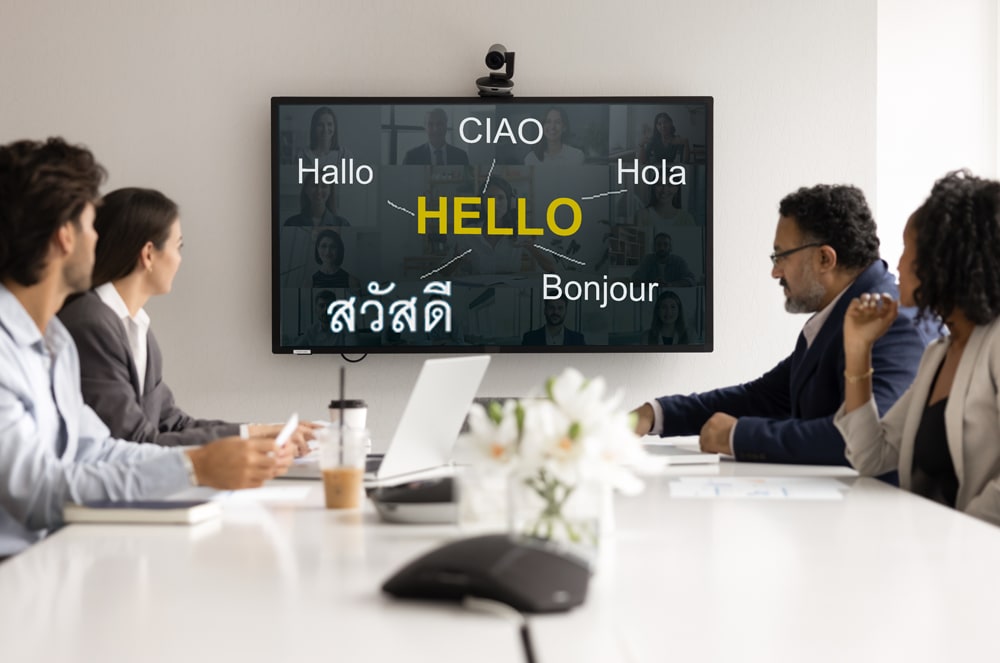
When you visit a bilingual Toastmasters club, you may hear the familiar rhythm of a club meeting: introductions, prepared speeches, evaluations, Table Topics®, a timer’s report, and applause. But you may also hear something else—a member pausing to find the right word in another language, a speech evaluator focusing on the speaker’s gestures when he does not fully understand what the speaker said, or an Ah-Counter teaching the group that “muletillas” are Spanish “crutch words,” similar to filler words.
That was my experience when I visited the Bilingue Toastmaster Club, an online Spanish-English club based in Chula Vista, California. The meeting was easy for me to follow, partly because it was mostly in English and partly because the Toastmasters structure was familiar. Still, the bilingual moments changed the feel of the meeting. One speaker moved between English and Spanish. Table Topics questions were given in both languages. One respondent began in Spanish and then switched to English.
For me, the result was not confusion. It was curiosity. The language elements added a spark to the meeting.
And that spark reflects something larger happening across Toastmasters. According to the Toastmasters International Research and Analysis Department, an estimated 17.2% of current clubs have members using more than one language. That does not mean those clubs are formally bilingual or multilingual, but it does suggest that language diversity is already part of the Toastmasters experience for many members.
For members who want intentional practice across languages, bilingual clubs offer something distinctive: a place to build communication skills, stretch language ability, and connect across cultures.
Many Ways to Be Bilingual
Bilingual clubs do not always speak “half in one language and half in another.” Instead, clubs may mix up language use throughout the meeting. Members may give speeches in one language and evaluations in another. Each club adapts the Toastmasters framework to the needs of its members.
At Hamburg International Speakers in Hamburg, Germany, members use German and English. According to founding members Max Ansorge and Markus Krause, DTM, the Toastmaster, General Evaluator, and other meeting leaders use the same language throughout the meeting. Prepared speeches and Table Topics may be in either language, and evaluations are given in the language of the speech. Members are encouraged to choose the language that challenges them, but once they choose, they try to stick with it. If they slip into “Denglish”—a blend of Deutsch (the German word for German) and English—the Grammarian may mention it.
Bilingual clubs offer members a place to build communication skills, stretch language ability, and connect across cultures.
“By avoiding all-German or all-English meetings, we prevent the club from effectively becoming two separate clubs under one name, with members attending only meetings held in their preferred language. Instead, whenever you attend a meeting, you will also be exposed to the language you find more challenging,” explains Krause, the Club President.
At Habla Hispanic Bilingual Toastmasters in Perth, Western Australia, the language balance looks different. Taka Daimaru, a Japanese member of the club, says meetings are approximately 80% English and 20% Spanish. The club primarily gives native Spanish speakers from countries such as Peru, Colombia, Venezuela, Chile, and Argentina a place to practice English, while also giving non-native Spanish speakers like Daimaru a platform to practice Spanish.
At Machida Bilingual Toastmasters Club in Machida, Japan, Yasunobu Higuchi, DTM, the club’s Vice President Education, describes a flexible English-Japanese approach. Members may choose which language to use and give prepared speeches in either language, with evaluations usually conducted in the same language as the speech. Translation or explanation is provided when needed. The club conducts business sessions and greets guests in Japanese, including at nijikai, or after-meeting social time.
Practice Without Perfection
For many members, the first benefit of being in a bilingual club is language practice. But the deeper benefit is gaining courage.
Joining a bilingual club can improve confidence in using a second language. Simone Nash, DTM, of DTM Day One Toastmasters Club, an advanced online club in China, says the club gave her more confidence speaking Mandarin fluently. She had learned Mandarin elsewhere and was nervous about participating but found the bilingual club environment encouraging. Her advice to others was simple: “Just do it.”
Hamburg International Speakers takes a self-paced approach. Ansorge notes that the club does not push anyone to use the language that is harder for them. “When they are ready, they are ready,” he explains. If members try the more difficult language, the club celebrates the attempt. The goal is not perfection; it is progress through “friendly and constructive feedback.”
That kind of support matters because speaking in a second language can feel vulnerable. You risk hesitation, grammar mistakes, pronunciation errors, and not finding the word you need.
Yet in a bilingual club, those moments become part of the learning process. During my Bilingue Toastmaster Club visit, one evaluator acknowledged that he was not proficient in Spanish, but he could still understand much of the speaker’s message through gestures and delivery.
That is a powerful reminder for any Toastmaster: Communication is larger than vocabulary.
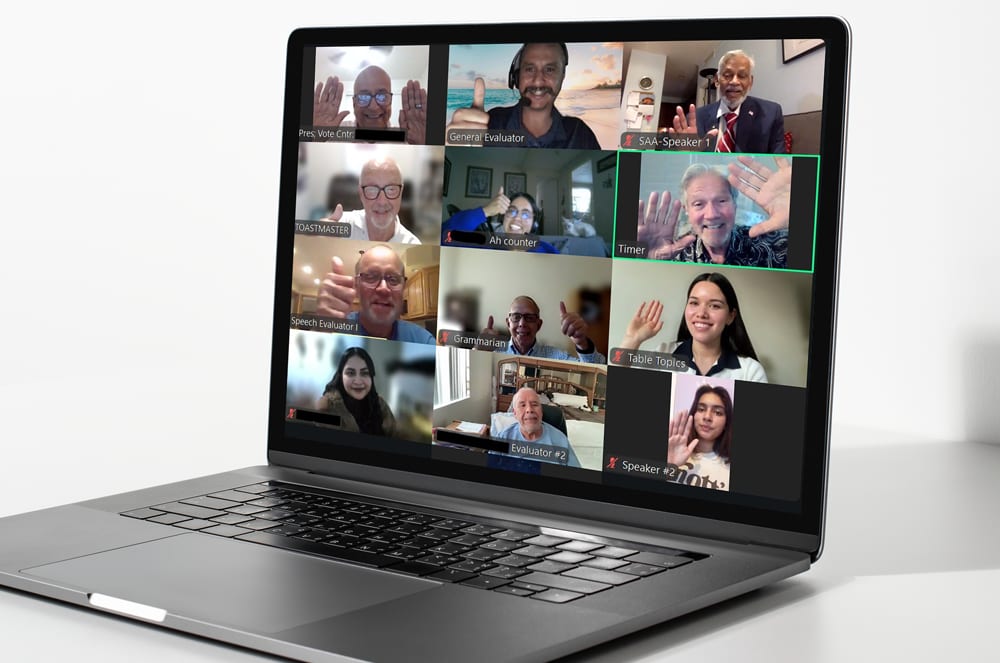 Bilingue Toastmaster Club
Language and Social Links
Bilingual clubs also help members build connections and offer learning opportunities that go beyond language. When Daimaru joined Habla Hispanic Bilingual Toastmasters, he was preparing to move from Albany, Western Australia, to Perth. He discovered the club through a Facebook ad before it chartered and thought it might help him make his first friends in the city. It did. After he joined, the club expanded his network quickly and he received invitations to parties and home gatherings.
Spanish also opened doors for him beyond the club. In Perth, Daimaru found a strong Spanish-speaking community and even joined a running club where members speak Spanish. As a Japanese speaker of Spanish, he stood out, but that difference became a point of connection rather than a barrier.
His experience also changed his understanding of the phrase “Hispanic culture.” As Daimaru pointed out, there is not just one Hispanic culture. Members of his club come from several Latin American countries, each bringing distinct cultural perspectives. Through the club, he is learning Spanish and also learning about Peru, Colombia, Venezuela, Argentina, Chile, and more.
My own assumptions were challenged when I visited the Bilingue Toastmaster Club. I expected a Spanish-English club to be mostly Hispanic and Anglo members. Instead, I found a different mix: Several attendees had Indian roots and now live in various parts of the U.S.
That is the hidden gift of bilingual clubs. They do not always connect the people you expect. They connect the people who show up willing to learn.
Hamburg International Speakers was built with that purpose in mind. Krause, one of the founding members of the club, explains that many newcomers arrive in Hamburg and take German classes, but do not have Germans to practice with. At their Toastmasters club, newcomers can talk with German speakers or listen until they are ready, while German native speakers who need English for their job can practice in a safe environment.
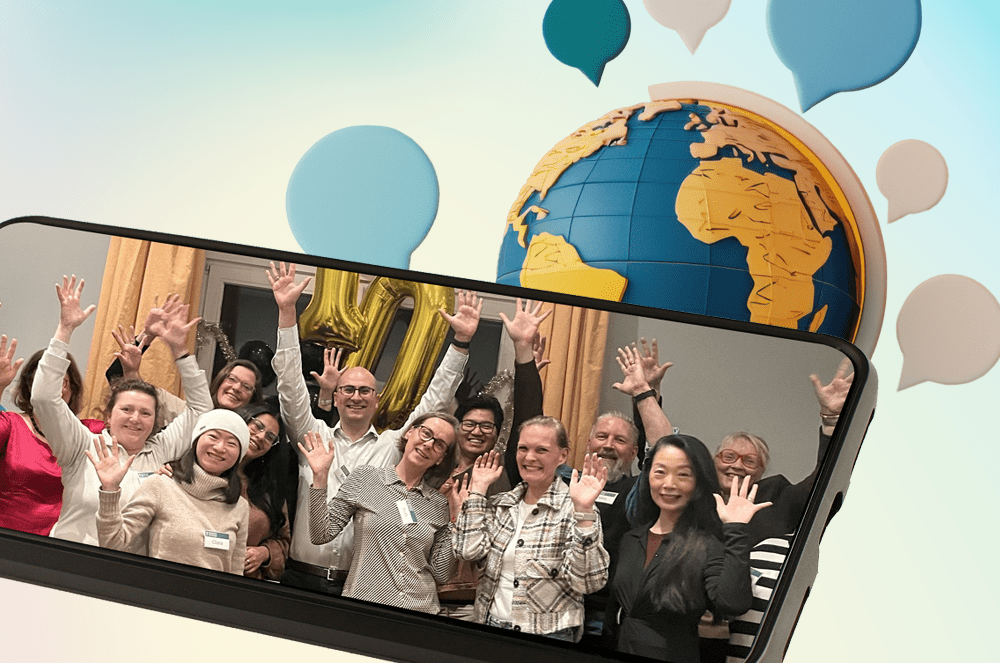 Hamburg International Speakers celebrates the 10th anniversary of its kick-off meeting.
Benefits abound. The Hamburg club founders note that members have formed friendships, discovered career opportunities, and shared celebrations. “Most importantly, every week we broaden our horizons by learning about different countries, cultures, and perspectives,” says Ansorge, one of the founding members.
Once a year, the Hamburg club stretches beyond bilingual into multilingual with what members call a “Tower of Babel meeting.” Members give speeches in their native languages, including not only German and English but also French, Russian, Polish, Arabic, Finnish, Spanish, Portuguese, and Chinese. Ansorge emphasizes, “You do not need to understand every word to receive a message.”
For a visitor, that may be the biggest lesson. You may not understand everything in a bilingual club. But you may understand more than you expect—a gesture, the expression on someone’s face when a word finally comes to them, or the applause that follows.
Bilingual clubs are not without challenges. Members have different fluency levels. Clubs may need bilingual officers or mentors to help with meeting roles. Guests may worry they will not understand enough. Some people may speak too quickly. For a visitor who speaks only English, accented English or quick language shifts can take extra concentration. If you are in a hybrid or online club, I found that turning on closed captions in Zoom helped me catch words I might otherwise have missed.
Start Where You Are
If you are curious about visiting a bilingual club, the advice from members is consistent: Start where you are.
You do not have to give a full speech in another language during your first visit. You can listen, introduce yourself, answer a Table Topics question in the language you know best, take on a small meeting role, or ask how guests usually participate.
When asked what he would say to someone with very limited language ability who was nervous about visiting a bilingual club, Daimaru borrowed a famous line from former U.S. President Franklin D. Roosevelt: “The only thing we have to fear is fear itself.”
A bilingual club is not just a place to practice another language. It is a place to practice being brave in another language.
In the process, you may gain more than vocabulary. You may find friends in a new city. You may gain confidence at work. You may reconnect with heritage, culture, or community. You may discover that even when words are imperfect, connection can still be clear.
And as you learn to say hello in more than one language, you may discover that your voice can reach further than you imagined.

Share this article


Diane Windingland, DTM is a presentation coach from Spring, Texas, and a member of Frankly Speaking Toastmasters in Spring, Texas, and PowerTalk Toastmasters in Minnesota. Learn more at virtualspeechcoach.com. She is also the author of the book The Clarity Code: How to Communicate Complex Ideas with Simplicity and Power.
 Previous Article
Related Articles
Cross-Cultural Communication
The Benefits of Bilingualism
Cross-Cultural Communication
Bilingual Clubs Cross Borders
Club Experience