

 Previous
For a long time, I believed that my voice only mattered if it was polished, practiced, perfect. I believed that unless I said things “the right way,” I didn’t deserve the floor. Perfectionism became my armor. Over-preparation became my safety net.
Until I realized something that changed everything: You don’t need to be perfect to be powerful. You just need to be present.
Being present means allowing the noise in the mind to soften, so you can sense, see, and feel what’s actually here—the people, energy, and moments around you. Presence is when your attention moves out of your head and into what’s unfolding right now.
The Power of Presence
Presence is foundational to public speaking. It is what allows technique to land. It is what steadies us when fear shows up.
We are living in a time when communication is louder than ever, yet many people feel unseen, unheard, and unsure of their voice. Why? Because self-doubt causes them to either hold back, or over-explain, their message. It becomes lost.
That’s why this moment matters. Not just for improving speeches, but for shaping a new era of communication.
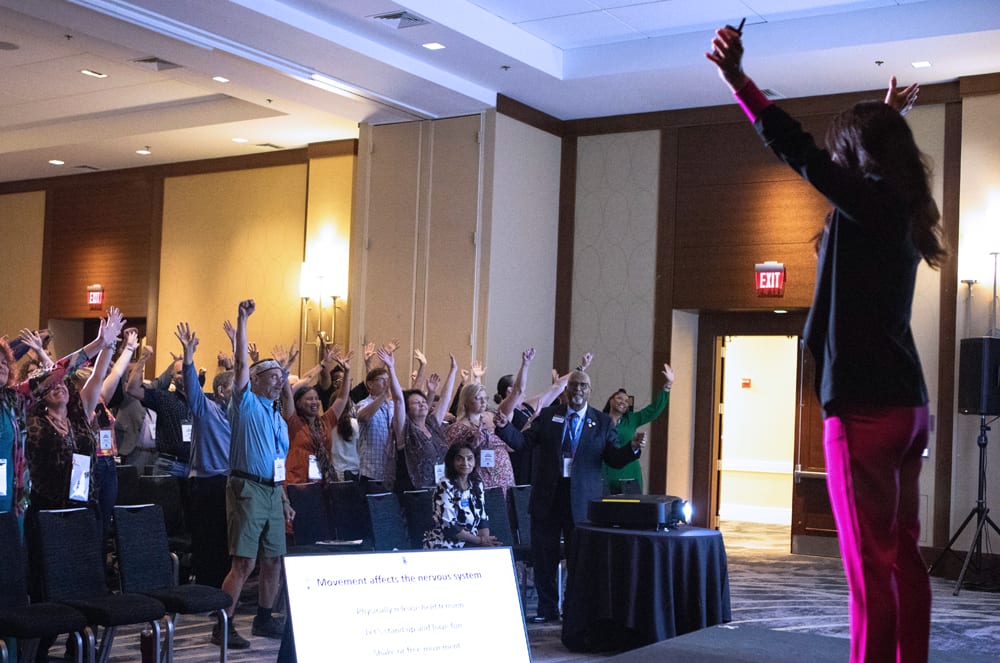
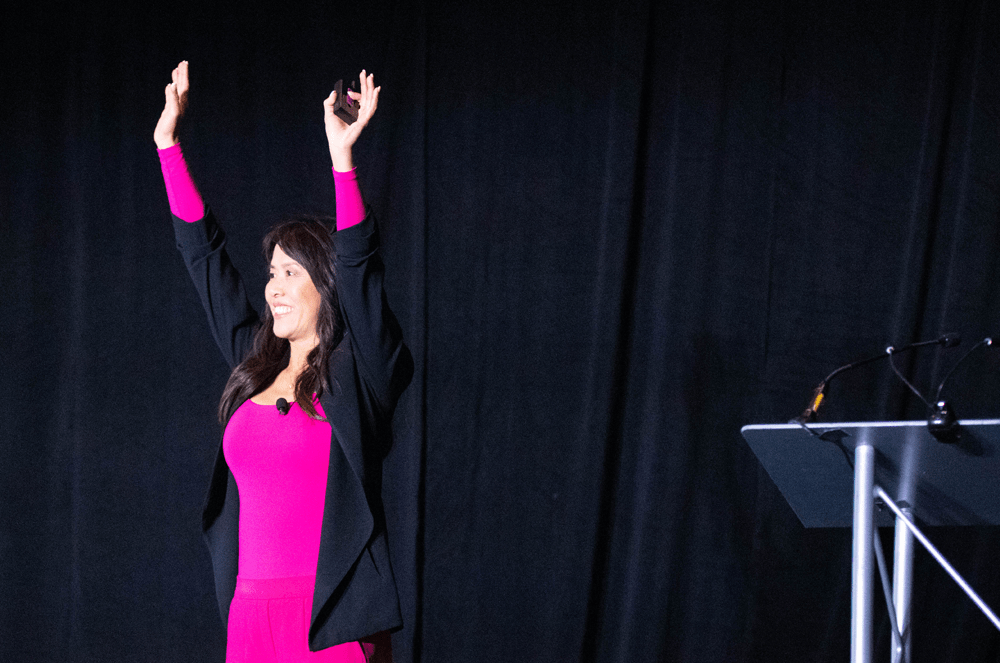 Melinda Lee at the 2025 convention.
The NET Approach
One of the most common fears in public speaking isn’t forgetting the words—it’s the moment before we speak. The racing heart. The tight chest. The thought What if I mess this up?
Over years of coaching leaders and speakers, I’ve taught a simple framework to move through that moment with clarity and self-trust. I call it the NET approach: Notice. Explore. Transform.
It’s not about eliminating fear. It’s about learning how to work with it. Imagine stepping onto a stage—or into a meeting that matters. A wave of nerves hits. In that moment, you have options. You can fight the fear. Suppress it. Judge yourself for feeling it.
Or you can move through it.
- Notice: Awareness Before Action
The first foundation of confident speaking is awareness. When pressure rises, what happens inside you? If we don’t notice our internal reactions, we can’t change them. That’s why we begin with a pause.
I use a simple internal check-in that I call the BEME Scan, which invites speakers to “BE ME”:
- Body: What physical signals show up? A racing heart? Tight shoulders? Dry mouth?
- Emotions: What feelings are present? Fear? Pressure? Excitement?
- Mind: What thoughts are firing? Don’t mess this up. They’re judging me.
- Environment: What about the space feels supportive or constricting?
There’s no fixing at this stage. No judgment. Just noticing.
Awareness creates space. And space creates choice.
- Explore: Gently Uncover the Story Beneath
Once we notice what’s happening on the surface, we can explore what’s underneath. Often, beneath every reaction is a story, a moment when we learned something about our voice. Maybe it was being interrupted. Laughed at. Told to “be quiet.” Or only praised when we were “perfect.”
When we name the story—even lightly—we loosen its grip.
A powerful question I invite speakers to reflect on is: When was the first time I felt like my voice didn’t matter?
This isn’t about reliving the past. It’s about understanding it—so it no longer runs the present.
- Transform: From Old Story to New Choice
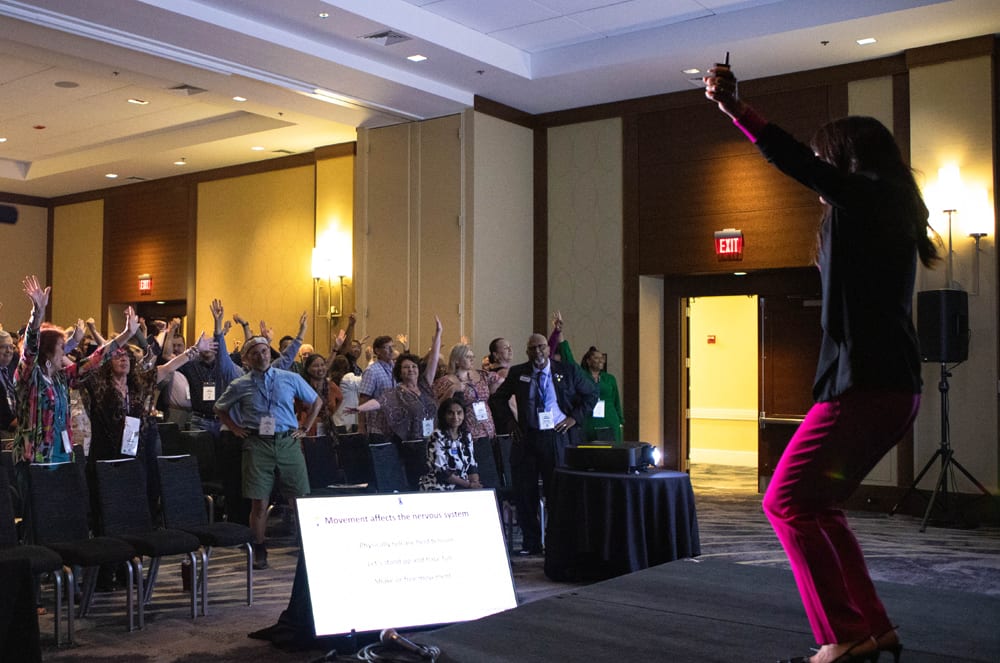
After awareness and exploration, the body often holds residual tension. So we move. Literally. Shaking out the arms, the shoulders, the whole body.
Then pausing—standing tall—in a moment of stillness. Most people live in a state of low-grade tension—they have butterflies, shortness of breath, and tight shoulders. All of this is meant to protect us. When we release the tension, it dissolves. Stillness lets the nervous system integrate. Then we are left with presence.
This isn’t silly. It’s neuroscience. Movement helps release stored stress. Stillness helps anchor confidence.
At this point, we invite a future-focused vision. Imagine walking into a room that matters. A boardroom. A stage. A conversation with someone you love. You speak calmly, clearly, and fully yourself.
Ask yourself:
- What do people hear in my voice?
- What do I want them to remember?
- What do I want my voice to be known for?
This version of you isn’t far away. It’s already here, waiting to be practiced.
The NET approach is not about eliminating fear. It’s about learning how to work with it.
We remember that speaking isn’t just about us; it’s about how we make others feel. That’s where true confidence lives.
The Ripple Effect of Your Voice
One of my favorite moments in workshops is when participants share a single word describing how they want others to feel when they hear their voice.
“Grounded.”
“Safe.”
“Inspired.”
“Clear.”
When those words echo around the room, something shifts. We remember that speaking isn’t just about us; it’s about how we make others feel. That’s where true confidence lives.
Imagine teams that speak with clarity instead of caution. Leaders who communicate with courage instead of fear. Communities where every voice is respected—not just the loudest ones. That’s not just a personal win. That’s a ripple.
Most people never pause long enough to examine what’s driving their communication. But if you’re reading this, you just did. You noticed. You explored. And you can transform.
Because shaping the next era of communication isn’t about being louder. It’s about being more present. More intentional. More human.
Your voice doesn’t just fill a room. It echoes across generations. So the question is: What kind of ripple will you create?
Share this article


Melinda Lee is a nationally renowned motivational speaker and coach who presented an education session at the 2025 Toastmasters International Convention. Learn more about her at speakinflow.com/about.
 Previous Article
Related Articles
Your Turn
The Many Sides of Leadership

Nerves
Scared of Public Speaking?
Convention