
 Previous
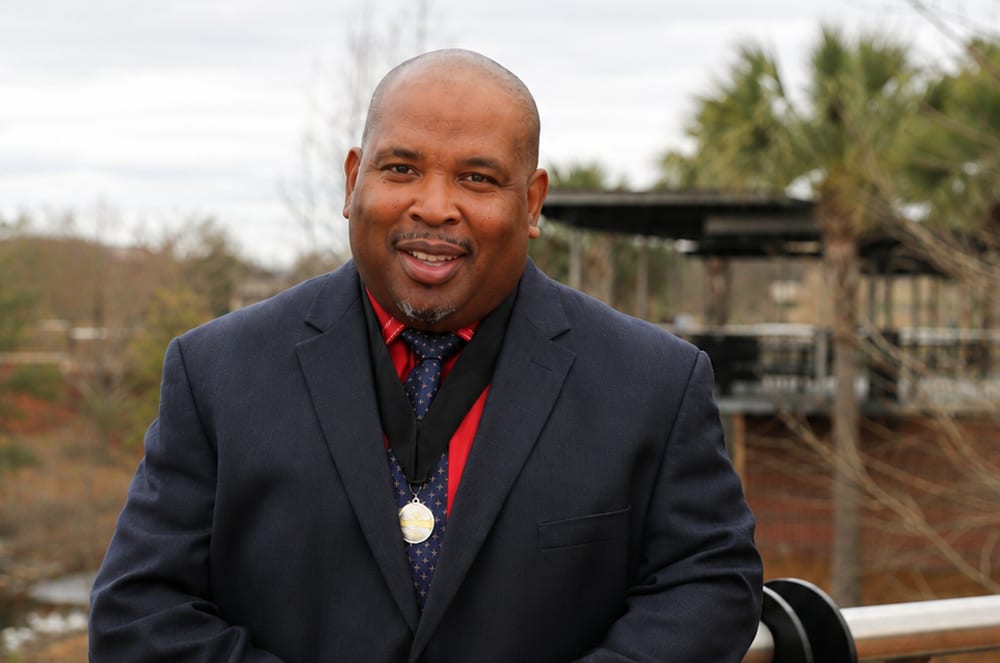
In March 2016, I was asked a question that initially caught me off-guard: “Why Toastmasters?”
When I joined the Early Bird Club, in Tallahassee, Florida, coworkers wondered what more Toastmasters could offer someone they already considered a strong speaker. Family and friends questioned what leadership lessons could still remain for me.
Their confidence in me was flattering, but incomplete. Beneath their questions lived three truths I knew deeply:
- I did not want to be merely a good speaker. I wanted to be a great one.
- I understood leadership as a lifelong discipline, not a finished achievement.
- Within 15 minutes of attending my first Toastmasters club meeting, I knew I had found a place where both growth paths were possible.
As a totally blind speaker, communication has always been essential for me. Toastmasters, however, revealed something transformative: Presence is learned, practiced, and refined through collaboration. I learned that the full benefit of partnering with fellow Toastmasters begins with being completely open about my personal communication and leadership goals.
My blindness was never allowed to become an excuse for delivering anything less than my best work.
Having lost my eyesight at the age of 5, I was not familiar or comfortable with the body language that often develops naturally through visual learning. From my earliest club speeches, fellow members, including my first Toastmasters mentor, Vickie Goodman, DTM, became my partners and guides. They helped me understand my posture and how my body moved while I spoke, identifying where gestures strengthened my message and where they distracted from it.
Fellow members even offered additional coaching, meeting with me outside of regular club meetings. They taught me how to anchor myself, how to use gestures that aligned with my words, and how purposeful movement could underscore transitions rather than pull attention away.
Despite being blind, I also developed tactics to connect with my audience beyond eye contact. For example, I learned how to establish physical markers in the speaking area to ground myself. From there, I practiced orienting my body toward different sections of the audience, turning deliberately at key moments, and holding my head and shoulders in ways that conveyed engagement and confidence.
Over time, eye contact stopped feeling abstract. Though I cannot see my audience, I learned how to connect with them fully, enabling listeners to feel acknowledged and included. I also received lots of good technical advice from members, including how to present myself more effectively online.
Through continued guidance from my peers, presence became something I embodied rather than something I worried about. My blindness was never allowed to become an excuse for delivering anything less than my best work. In Toastmasters, growth is expected, supported, and shared.
In addition, through mentoring members and chairing meetings, I learned to refine strengths that came naturally to me: listening deeply, being mindful, and understanding the needs and motivations of others. Toastmasters strengthened my ability to hear what was unspoken, sense the emotional tone of a group, and respond with empathy and clarity.
Leadership, I discovered, is less about being seen and more about being attuned.
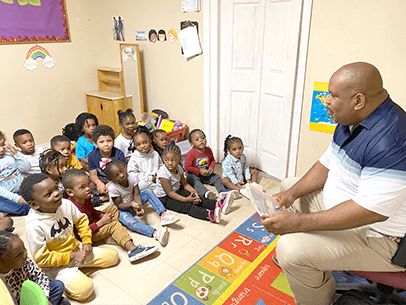
I drew on all I had learned when I gave a speech to a Toastmasters Gavel Club in a Florida correctional facility. After I spoke, more than 30 men approached afterward to shake my hand, offer thanks, and share encouragement. It was a deeply meaningful experience.
Nearly a decade after I first became a member, I still smile when someone asks, “Why Toastmasters?”
Because I am still learning. Still refining. Still growing as a speaker, a leader, and a blind man committed to excellence.
After all, the best way to grow is beyond the limits we place on ourselves.

Share this article


W.C. Blackmon, DTM is a speaker, author, and music creator based in Tallahassee, Florida. A three-time Distinguished Toastmaster, he belongs to We Can Speak-Podemos Hablar Toastmasters Club, Transformation Toastmasters Club, and Talk of Tallahassee, all in Florida. Connect with him on LinkedIn or at wcblackmon.com.
 Previous Article