

 Previous

Carolyn Stein, DTM, will never forget the audience member who saved her speech.
“I was talking about a rather serious subject, and the group in the next room was laughing about something and being very loud, which was interfering with my speech,” says Stein, an author and international speaker and a member of North Miami Beach Toastmasters Club in Florida. “Somebody in my audience went to their room and asked them to be quiet, and they did. That said everything, and I’ve never forgotten it.”
As speakers, we’re trained to put the audience at the forefront of everything we do. Your speech isn’t really about you; it’s about the audience. Talk about things they care about. Craft your message with their needs in mind. Hook them in the first few seconds or they won’t listen at all.
But what about the audience themselves? Don’t they have some responsibility?
They do—to the speaker and to each other. Ask anyone trying to deliver their message while people are texting in the front row. Ask anyone trying to focus on the speaker while people are chattering in the seats behind them.
But don’t just ask them—ask science.
Crucial Connections
Researchers have found strong connections between audiences and speakers. For example, one study in 2026 compared the effects of supportive and unsupportive audiences. “The unsupportive audience elicited greater negative affect [sic], arousal, and anxiety [in the speaker], and . . . decreased the speaking rate,” the authors wrote. Another study from the same year found that smartphone-related interruptions can alter the dynamics of a performance.
Researchers have also identified clear two-way communication between audience and performer. They looked at posture changes, fidgeting, scratching, adjusting glasses, and other small movements as possible indicators of engagement. They discussed how attentive posture, facial reactions, and appropriate laughter can provide crucial feedback to the person performing.
You can encourage a nervous speaker by smiling and nodding to reassure them that their message is getting through.
Other studies have looked at how audiences affect each other and how that behavior is felt by the speakers. One, in 2013, found that a person’s likelihood of beginning to applaud increased as more people around them started clapping.
Science also tells us that being a supportive audience member can enhance other audience members’ experience. A 2020 Scientific Reports study measured people attending live theatrical performances and found “physiological synchronization” among spectators. Their cardiac synchronization—similar heart rate patterns—was associated with convergence in their emotional evaluation of the performance. The researchers concluded that simply being with other people sharing an experience can produce spontaneous synchronization.
No Bad Audiences
Stein, the Florida Toastmaster, knows from personal experience that audience behavior is crucial to the success of a speech. “I’ve had bad audiences and I’ve been a bad audience,” she says. “You get bored, so you start chatting with the person next to you or you start checking your cellphone.” She has coped with belligerent people and those who couldn't wait to raise their hand and disagree with something she said.
But she doesn’t blame those people. “I will not label a whole audience as ‘bad,’ except one—and that was my fault.” She didn’t fully research the group she had been hired to speak to, and the material she presented was of no interest to them.
She tries not to react to misbehavior, unless she can use humor. “When a cellphone rings in the middle of my speech, I’ll say something like ‘That must be the president calling me again.’”
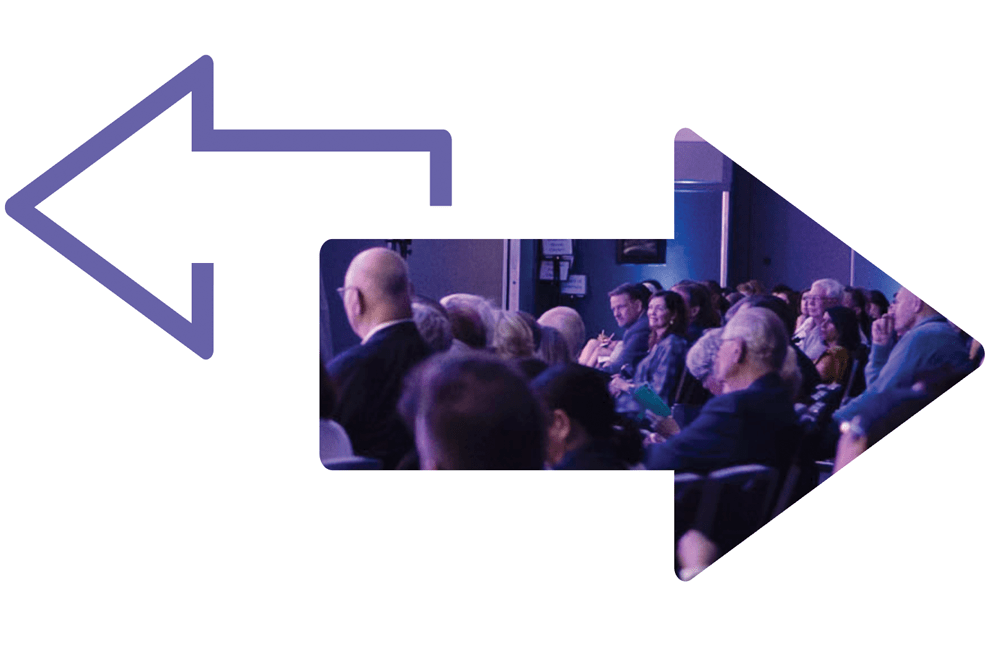
Sometimes, being a good audience means more than turning off your cellphone and saving the chit-chat for after the show. If there’s a tech delay, be patient; the speaker is probably more stressed out than you are. You can encourage a nervous speaker by smiling and nodding to reassure them that their message is getting through. Stein is also grateful to the person who brought extra chairs to her overcrowded room without being asked.
Don't hold back laughter and applause, as long as they're genuine. I’m still smarting from my decidedly unfunny performance at a Humorous Speech Contest. I had “killed it” at the club and Area rounds, but when I brought the same speech to the Division level—crickets. If someone had given me “pity laughter,” I would have felt even worse.
More Audience Tips
Although every speech and performance is different, you should always aim to be a good audience member. Luckily, there are a few simple tips every listener can use to show their support to the speaker.
If You’re in the Room
• Pay attention, and show that you are. Respond to the speaker by smiling, nodding, or giving other signals that their message is getting through.
• Sit up straight. Nothing says “You’re boring me” like slumping in your chair or hunching over your table or desk with your chin propped in your hands. You may like the speech, but the speaker sees your body language and thinks they’ve lost you.
• Put away your phone. Keep it on silent, vibrate, or, better yet, Do Not Disturb. Social media and email can wait; wouldn’t you like a break from them anyway?
If You’re Online
• Keep your camera on. Unless the host has asked attendees to turn theirs off, or you have an extenuating circumstance, let the speaker see who’s out there. Adjust your lighting so you’re actually visible. However . . .
• Keep personal actions out of sight and hearing. Do you have to eat lunch or dinner during the meeting? Okay, but turn off your camera. And mute your microphone—we don’t want to hear you munching away, either.
• Keep your microphone off. This is especially important if there’s noise in your room that can interrupt the speaker. Minor noises aren’t usually a problem in a live meeting room, but they’re magnified online—and can cause you to suddenly pop up as if you’re the speaker. (That goes for any issues within microphone range.)
Where Supportive Audiences Are Made
Toastmasters’ main mission is building better speakers, but you’ve probably found yourself becoming a better audience member too. Serving as a speech evaluator or in one of the typical meeting’s functionary roles, like Ah-Counter or grammarian, trains you to listen and offer constructive feedback. Some clubs even assign a Body Language Monitor meeting role to assess audience members along with the speakers. Is anyone slumped over their table, or mostly making eye contact with their cellphone?
Being a speaker yourself also makes you a more supportive audience member. Once you’ve seen the view from onstage, you can’t help but empathize with those who brave nerves and fears to stand up and speak.

Share this article


Kate McClare, DTM , is a professional writer and editor who joined Toastmasters in 2011. She is a member of Miami Advanced Toastmasters Club in Kendall, Florida, and an Area Director for District 47, Southeast Florida and The Bahamas.
 Previous Article