


 Previous
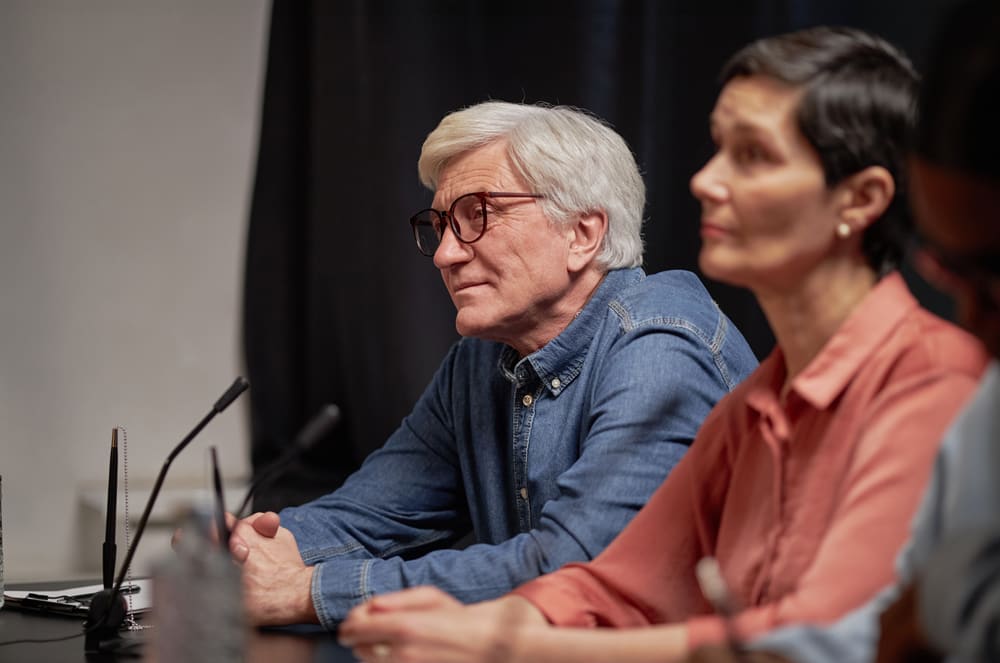
You may have watched dozens of Toastmasters speech contests, enjoying the stories, humor, and polished deliveries. But the experience changes when someone hands you a ballot and asks you to help determine the official results.
Now you are listening with a different purpose, weighing structure, language, delivery, audience connection, and effectiveness. You are responsible for applying the contest criteria fairly rather than simply rewarding the speech you liked best.
That responsibility can feel intimidating. It can also become a valuable learning experience in your Toastmasters journey.
What Does a Judge Actually Do?
A voting judge listens to every contestant, applies the criteria on the ballot for that contest, and ranks the contestants first, second, and third. Official Toastmasters speech contests include International, Evaluation, Humorous, Table Topics®, Tall Tales, and Online.
Just before the contest, the chief judge briefs judges and provides the ballot and Judge’s Certification of Eligibility and Code of Ethics. Judges are also encouraged to view the online Speech Contest training videos on the Toastmasters website in advance. During the contest, judges have one minute between speeches to mark their ballots. You are not simply watching; you are listening with accountability.
And don’t be intimidated, thinking you need a lot of prior experience. At the club level, you need only be a paid member. Higher levels have additional requirements. To judge an International Speech Contest Quarterfinal, Semifinal, or the World Championship of Public Speaking®, you must have completed a Pathways path and have previously judged at the Area level or higher.
Learn to Listen Differently
Eleos Theofilus of World Travelers Toastmasters Club, an online club based in Singapore, recalls judging two speakers who drew very different audience reactions. One was animated and sparked laughter; the other was quieter. Theofilus initially favored the more energetic speaker, but applying the criteria led him to a different conclusion. His takeaway: “Applause is feedback, but it is not the scorecard.”
Roger Caesar, DTM, of Raising Champions Advanced Toastmasters in Brampton, Ontario, Canada, and Alexandre Matte, DTM, of Voix du Nord in Sudbury, Ontario, Canada, both former top-three winners in the World Championship of Public Speaking, describe a similar shift. Caesar learned to flip into a more analytical “judge mode” rather than simply experience a speech as an audience member. Matte similarly adjusts his mindset depending on whether he is listening as an audience member, coach, or judge.
Discover What Makes Speeches Work
Judging gives you a concentrated opportunity to compare speakers who may all be effective in very different ways. That comparison can sharpen your speechwriting.
Alex Llerena, DTM, of Team Entrepreneur Toastmasters in Weston, Florida, says, “A speech may be well organized, but it becomes memorable when the structure, words, voice, and emotion all support the same purpose.”
Mark Reynolds, DTM, of the Aldinga Toastmasters Club in South Australia, says, “Understanding judging criteria helps me to understand what components are important to creating a well-structured speech.”
Caesar and Matte came to the criteria from different directions as contestants. Caesar studied the expectations closely so he understood what judges were evaluating. Matte eventually shifted away from consciously focusing on the ballot, because he found that concentrating too heavily on criteria could interfere with connecting naturally with the audience. Their experiences suggest a useful balance: Know the criteria, but don’t turn your speech into a checklist.

Become More Aware of Bias
Good judging does not require you to stop being human; it requires you to recognize when your human reactions are competing with what’s on the ballot.
“We are human beings,” Caesar says. “Sometimes judges judge based on emotions they are feeling that particular day.” He gives the example of a judge who has had a bad day and is naturally drawn to the speaker who makes them feel happy. Caesar also cautions against scoring the first speaker lower simply because later speakers have yet to be heard; each contestant should be judged on the criteria, not on their place in the speaking order.
Matte points to another possibility—sympathy for a contestant. “Sometimes we just need to turn off our emotive brain because that fuels possible bias.”
Bias can also mean favoring humor over inspiration, energetic delivery over a quieter style, or a subject you personally enjoy. Reynolds, the South Australian, advises judges that “personal likes and dislikes for the subject matter are irrelevant, except insofar as the criteria for audience suitability and reaction.”
Theofilus, of the Singapore-based online club, offers an even simpler reminder: “Judge the speech you heard, not the speech you would have given.”
Llerena puts it this way: “Good judging requires both structure and judgment.”
Another challenge is separating official judging criteria from the “unwritten rules” that members may hear repeated over the years. Matte gives the example of “worldwide appeal”—the idea that a District-level International Speech Contest judge should consider whether a speech could succeed with an international audience.
He notes that this may be useful strategic advice, especially because the District winner advances to the quarterfinals by video, but it is not an official judging criterion. The lesson applies at every level: Before penalizing or rewarding a contestant for something you have heard judges say, ask, “Is this actually on the ballot or in the rules?”
Why You Should Volunteer
Judging strengthens skills you use as a speaker—listening, analysis, organization, and delivery awareness—while also asking you to practice different abilities: comparative analysis, impartiality, decision-making, and accountability.
It can also deepen your Toastmasters experience through service. According to Theofilus, good judging can “encourage improvement, build trust, and raise the standard of communication and leadership” throughout Toastmasters. Llerena notes that good judging also helps clubs and members recognize strong speaking and learn from the contest process. As a chief judge, Reynolds has studied the ballots closely enough to brief other judges.
Judge the speech you heard, not the speech you would have given.
—Eleos TheofilusYou do not need to be a championship speaker to begin judging at the club level. You do need to prepare. Even Matte says, “I still read the back of the ballot before judging.” Attend the briefing. Give every speaker your full attention. Notice your preferences. Then return to the criteria.
Your rankings may not match the final results. That does not automatically mean you judged poorly. Don’t be discouraged. As Llerena observes, confidence comes through practice, just as it does with speaking.
The next time your club needs judges, consider saying yes. You may arrive expecting only to rank speakers first, second, and third, and leave with a clearer understanding of how every speaker, including yourself, can communicate more effectively.

Share this article


Diane Windingland, DTM is a presentation coach from Spring, Texas, and a member of Frankly Speaking Toastmasters in Spring, Texas, and PowerTalk Toastmasters in Minnesota. Learn more at virtualspeechcoach.com. She is also the author of the book The Clarity Code: How to Communicate Complex Ideas with Simplicity and Power.
 Previous Article
Related Articles

Presentation Skills
How to Run a Club Speech Contest
Communication