


 Previous

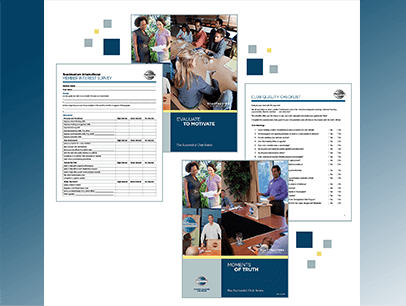
When Victoria Hsueh became Club President of the PMIWDC #01 Toastmasters Club in McLean, Virginia, she wanted to get an immediate feel for what members liked and didn’t like about the club.
“I created a survey, and I asked members what their pain points were, if they felt that the program was helpful, if they needed training, and if they felt that they were connecting,” Hsueh says. “I also wanted to know what they felt about the club’s culture.”
Based on the results of the survey, Hsueh revamped the club’s website and added more social and educational events to its calendar. She also continued to administer the survey every six months to adapt as needed. Just as important as collecting and acting on the feedback, she says, was letting members know that their voices were being heard.
“If people give me feedback, I immediately bring it back to the club and tell everybody, ‘This is what’s going on. This is what we’re doing,’” she explains. “I’m very transparent with the message.”
That’s the idea behind the feedback loop—a cycle in which members are asked for feedback, the feedback is considered and acted on by leaders, and leaders let members know what changes were made in response to the feedback.
“Everyone in a club, especially officers, need to have a feedback loop so that they get the ideas and opinions of the attendees, the members, or even the potential members—if someone comes as a guest, their feedback is very valuable,” says Deniz Senelt Kalelioglu, DTM, a former Division Director in Turkey. “You can use all that to make the meetings better, make the organization better. If you don’t do anything with the feedback, then it’s a lost resource.”
Gathering Feedback
There are many ways of collecting feedback, ranging from the informal to the formal, Kalelioglu says, though preserving anonymity often results in the most honest reactions.
“People might feel intimidated, or they might be afraid of hurting other people. The environment should feel safe for people to give honest feedback. Either let people give feedback without their names or assure them that it will be kept confidential.”
When it comes to surveys, there are a mix of tools, from quick Zoom or online polls that take just a moment to longer surveys taken at regular intervals—quarterly or every six months—that provide a more comprehensive view. Kalelioglu recommends that surveys contain a mix of quantitative questions—questions that ask for yes/no answers or a 1-10 agree/disagree score—and open-ended, qualitative questions that provide more context and information.
Leaders can use artificial intelligence and other technology to quickly pull data and trends from a set of quantitative questions, but the qualitative questions, she says, “give more information, and give more real information.”
Surveys may provide long-term data that can be preserved, but leaders also can take advantage of the social aspects of a Toastmasters meeting to gather informal feedback in person. Members may be flattered to be asked for their opinion, leading to a thoughtful response, says Jocelyn Tyson, 2023 World Champion of Public Speaking and Vice President Public Relations for the Advancing Toastmasters Club in Arbutus, Maryland.
“Right before a meeting, I might say to someone, ‘If you don’t mind, I want to pick your brain about the open house,’ or ‘How’s our website?’ Especially somebody who’s relatively new, so they’re coming with a fresh perspective,” she says. “You want to make sure you’re building relationships before you start asking for a lot of feedback, so when you get that feedback, it’s genuine and it can be helpful.”
"If you don’t do anything with the feedback, then it’s a lost resource."
—Deniz Senelt Kalelioglu, DTMClosing the Loop
No matter what method you choose to gather feedback, Kalelioglu says, it’s important to close the feedback loop. Letting people know that the feedback was received and how it was acted on helps to ensure that they remain invested in the feedback process.
“If people are asked to give feedback and nothing happens with that feedback, they’re not going to give it the second time around,” says Kalelioglu, who is a professional coach for CEOs and business leaders. “They will think, I told you my thoughts before, and nothing happened, so why bother?”
When leaders share the results of surveys and other feedback and how they plan to implement any resulting changes, it’s best to be specific, Tyson says. Adding numbers and dates makes members feel like their feedback was heard and a plan is being implemented because of it.
“That’s the pivotal piece,” the World Champion says. “You can say, ‘We did a survey, and it was determined that at a rating of three out of five, this area needs the most attention, and because of that, these are the top three things we’re working on. And we’re looking to see a change by this date in the first quarter.’”
Look for Consensus
Feedback is a valuable tool for assessing a club’s performance and making changes when necessary, but leaders should use discretion when looking at their evaluations, Hsueh, the Club President, says. Multiple people making the same observation may indicate a change is needed; one person offering negative feedback may not.
“It needs to come from many different sources,” she continues. “Maybe one person complains a lot—that’s not feedback. That’s somebody complaining. I don’t even consider some feedback, because I know the logistics, and I know how it would impact the entire club. You have to look at the entire picture—whether it impacts the majority of people or just benefits a few people.”
Future Planning
From her experience as a business coach, Kalelioglu says in the corporate world, feedback loops have grown in importance in recent years as leaders realize the potential for learning and development. Many workers receive annual evaluations that result in action plans for the year to come, and 360-degree feedback considers opinions from an employee’s superiors and direct reports, as well as a self-evaluation, to create a holistic picture of their performance. Just as in organizational feedback, it’s important to act on the recommendations, whether it’s creating short-term or long-term change.
“It’s important to keep your ears open to whatever you hear,” Kalelioglu says. “Sometimes it’s easier to ignore it, or it would take too much time to implement it for the short term. But strategy and planning are important tools for success, and to make a strategy, you need to be thinking long-term. Feedback is about today, but it carries you to the future.”
Essential to Growth
The bottom line about feedback is to realize its importance and make it a priority. If a Toastmasters club struggles with retention, engagement, and attracting new members, it’s vital that leaders listen to what members tell them about how to make improvements—and follow through on the recommendations.
“Feedback is essential to growth,” Tyson says. “When you don’t get that feedback, you’re not really sure how it’s going. You’re just basing things on your own assumptions. In Toastmasters, I can stand up and give a speech, then there’s the evaluation process. That’s what makes it a great learning experience. In leadership, it’s pivotal to implement that as well. You need to do your own evaluation process to know where you’re going as a club.”

Share this article


Greg Glasgow is a Denver-based author and freelance writer and a frequent contributor to the Toastmaster. He is the author of Disneyland on the Mountain: Walt, the Environmentalists, and the Ski Resort That Never Was.
 Previous Article
Related Articles
Club Experience
Surveys Speak Volumes

Club Experience
Top Tips for Membership Building

Club Experience