


 Previous
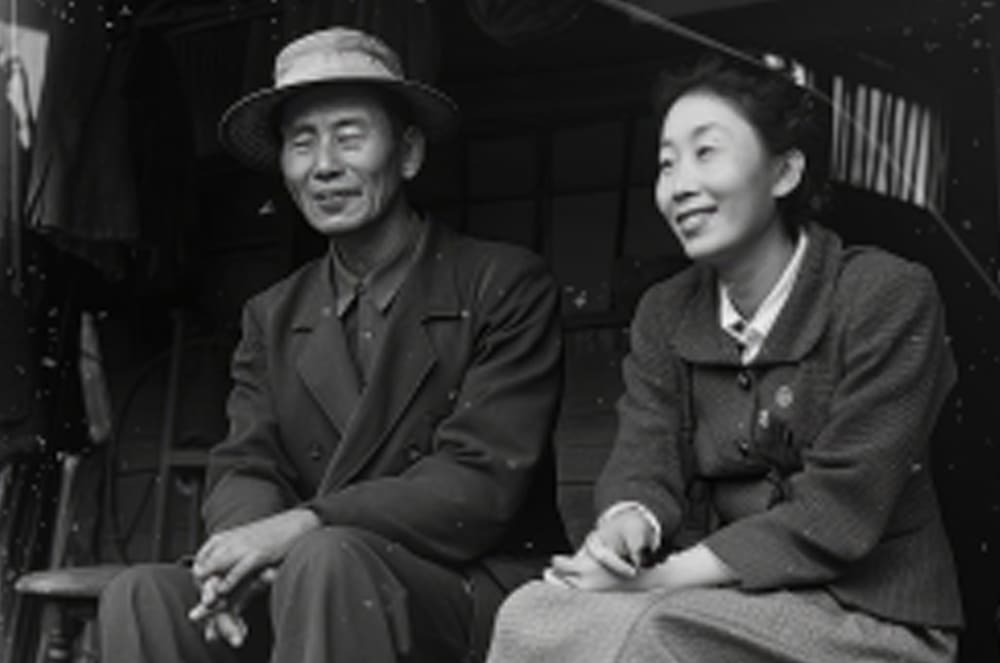
When my then-18-year-old father was stationed at Fort Dix in New Jersey, in 1942, he learned he could make a few extra dollars a month by becoming a paratrooper. Being a good son, he wrote to his parents about the idea. My grandmother immediately dispatched my grandfather to the base, a 20-mile train journey from their home, with the following message: “Your mother says that if you jump out of an airplane with a parachute, she will jump off the roof with an umbrella.” My dad quickly changed his plans.
I recount this story for several reasons. First off, it demonstrates both my grandmother’s sense of humor and her wisdom. Second, it shows how close the family was. Then there is that extra dollop of nostalgia for a different era. And finally, it connects me to these people I adored, who are all long gone.
That, in a nutshell, is the heart of family storytelling.
I’ve been fascinated by storytelling for more than two decades—I’ve taught storytelling studies, been a performance storyteller around the world, and even wrote a book on the topic. And I’ve seen the power of family storytelling.
In this form of communication, whether shared onstage or in the home, family members tell stories about other family members, especially recalling when older relatives were younger, or people who are long deceased. The most interesting and valuable of these tales have often been told from person to person and generation to generation.
You might think of family storytelling as the verbal memoir of the family. Or as the unofficial line on our loved ones.
It's also cheap therapy, explains Judith Black, an acclaimed storyteller from Marblehead, Massachusetts, with 50 years of onstage experience. “Life happens. Understanding why and how it has touched us is the result of this process we humans call story-making,” she says.
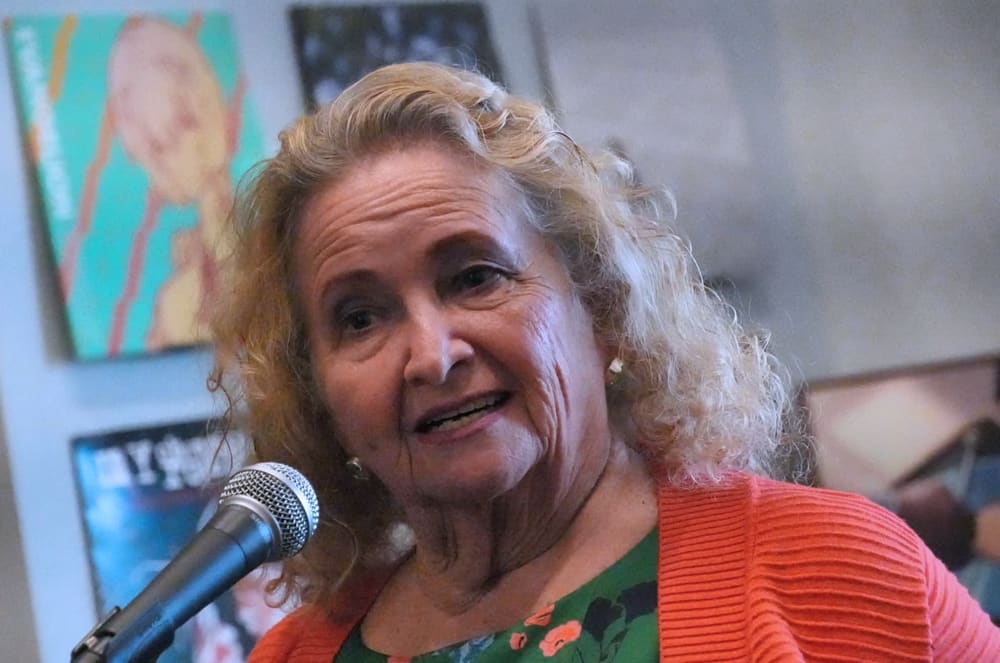
Florida Toastmaster Adele Alexandre often includes family stories in her speeches.
Adele Alexandre, of Boca Raton Toastmasters in Florida, likewise sees a therapeutic effect. “These stories keep my family members alive for me. When I tell stories about my relatives’ bravery, strength, or sense of humor, I feel happy.”
You might think of family storytelling as the verbal memoir of the family. Or as the unofficial line on our loved ones.
Entertaining and Illuminating
Family storytelling takes all forms, long or short, funny or sad, historical or trivial. In every case, they illuminate something about the characters in them, and so, the family as a whole.
People enjoy telling such stories at every family-related opportunity, from weeknight dinners to holiday celebrations to weddings and at bedtime—even while peeling potatoes or washing dishes. That’s because these tales have a wonderful way of binding families together by strengthening the threads between generations. And like all stories, they can also be entertaining, revealing adventure, suspense, and passion.
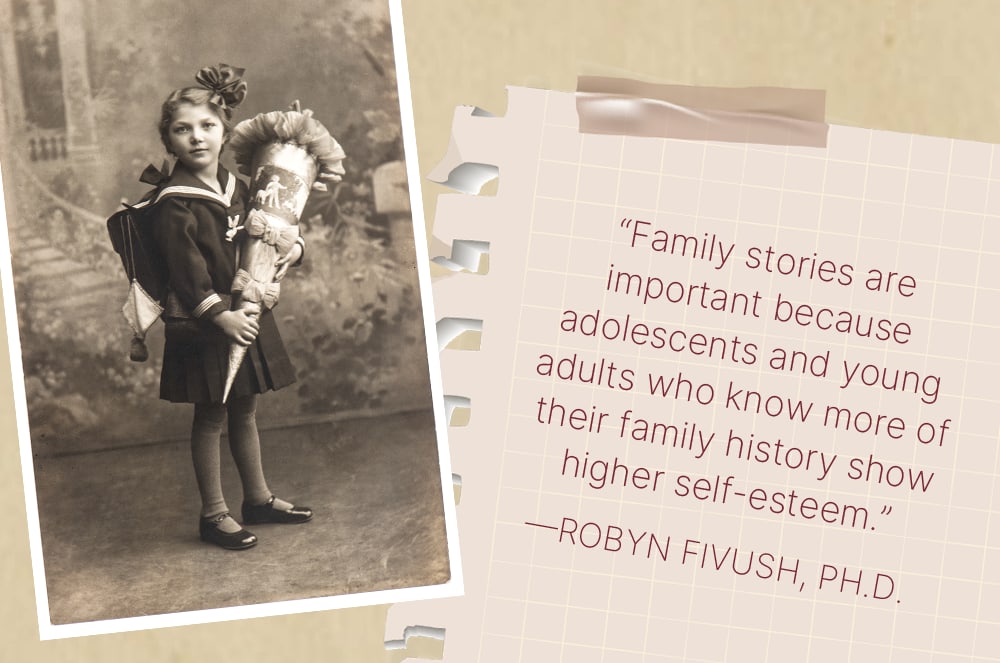
Family stories can work on a deeper level, as well. Robyn Fivush, Ph.D., a psychology professor at Emory University in Atlanta, said on the Hidden Brain podcast, “Family stories are important because adolescents and young adults who know more of their family history show higher self-esteem, fewer behavior problems, lesser depression and anxiety, and a higher sense of meaning and purpose in life.”
“When I tell stories about my relatives’ bravery, strength, or sense of humor, I feel happy.”
—Adele AlexandreHelping children explore and feel pride in where they came from through family role models, she suggests, provides “an anchor, a sense of belonging, and a way of understanding how the world works.” It’s also beneficial for the older people who tell these stories, she adds, giving them a sense of pride for leaving a legacy to the next generation.
And don’t worry, says Fivush, if you start to tell a family story and your children or grandchildren roll their eyes. They are still paying attention. And later on, they’ll wish you’d told them more!
Story vs. History
There is an important difference between family storytelling and family genealogy or history. The goal of genealogists and historians is to gather facts that are as verifiable and indisputable as possible. The goal of storytellers is to create a compelling narrative that will be felt, understood, remembered, and passed along.
This is not to say that you want to make up important information in a family story. But you do not need to verify every fact either. You may even find that hearing the same family story separately from different relatives is instructive. What did one family member take away from the experience that was different from another? Does it affect the meaning of the story?
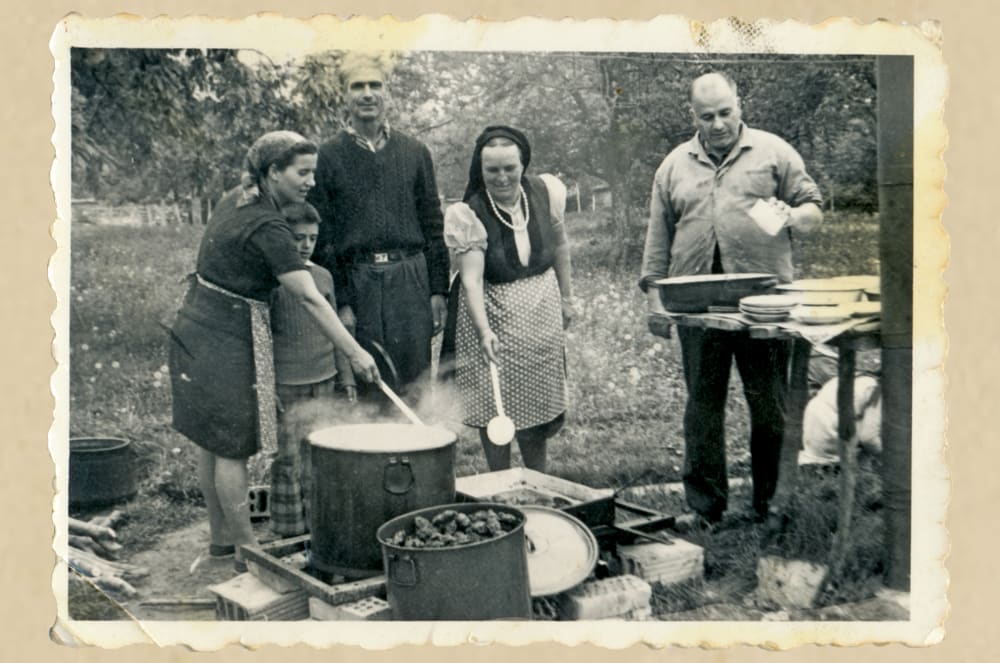
The Family Onstage
The family is also a major source of material among professional storytellers and speakers.
Alexandre, the Boca Raton Toastmasters club member, who is a storyteller, speaker, and clown, says, “Professionals tell family stories because family is a universal subject, something we can all relate to. After all, everyone came from a family.” She frequently tells family stories in her Toastmasters club.
I have had the same experience. Among my most successful club speeches was one I was rehearsing before presenting it at my father’s 75th birthday party. I was delighted to discover how everyone related to the stories about my dad—I even won a best speech ribbon!
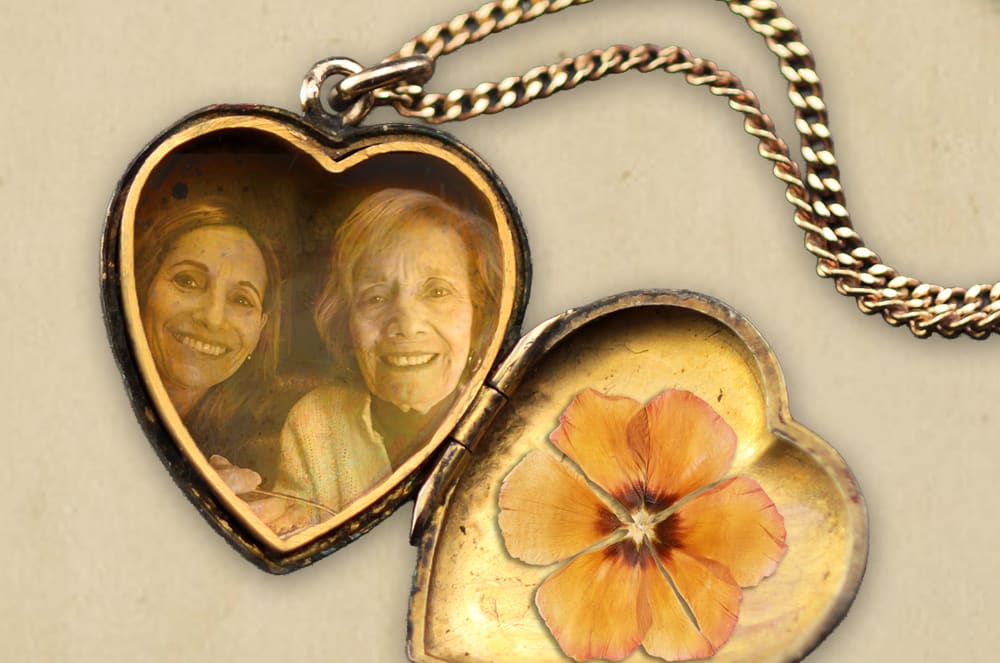 Author Caren S. Neile with her mother, Gloria Schnur
Black, meanwhile, has in her vast repertoire several full-length shows on the subject, including “Retiring the Champ,” about her mother-in-law’s battle with Alzheimer’s, and another, “Esau, My Son,” about her child who grew into a wonderful man, despite not conforming to all of his parents’ and teachers’ expectations when he was a child.
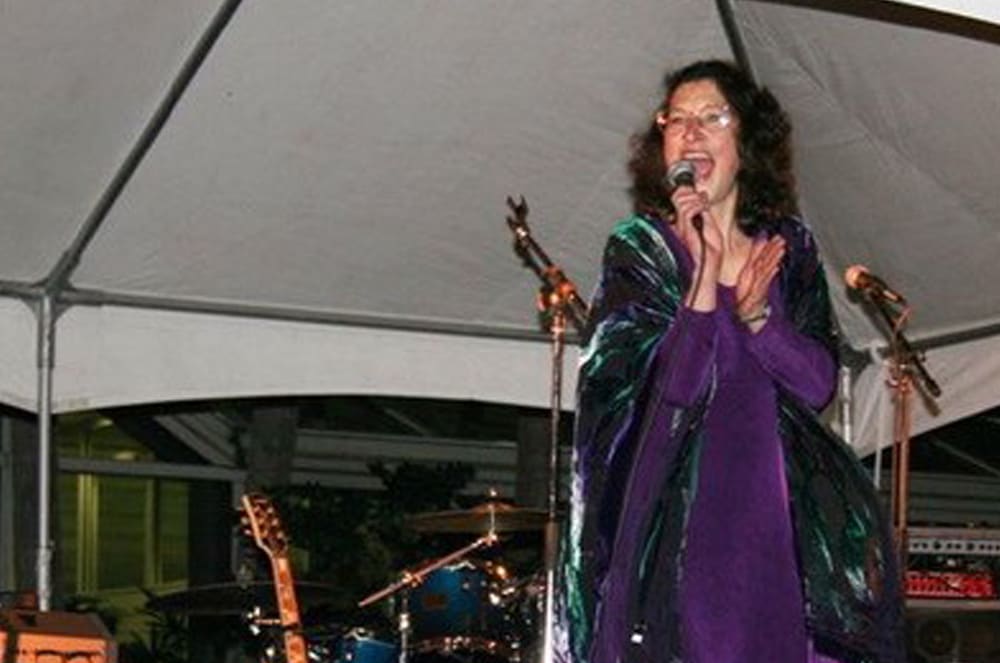
Judith Black has many years of onstage experience as a storyteller.
“When people see themselves in my performances,” she says, “I have opened a door for them to start exploring the meaning of their own experiences. So I keep getting invited back for more.”
When you decide to collect or tell stories from your family, remember: Time is of the essence. People in our lives forget the past, or pass away. People relocate. These stories of your families are your precious legacy. Are you ready to claim it?

Share this article


 Collecting Stories
Caren S. Neile, PhD teaches, writes, and stockpiles social capital in Boca Raton, Florida. Visit her at carenneile.com
 Previous Article
Related Articles

Storytelling
Bring Your Speech to Life With a Story

Presentation Skills
Everyone Has a Story

Presentation Skills