


 Previous
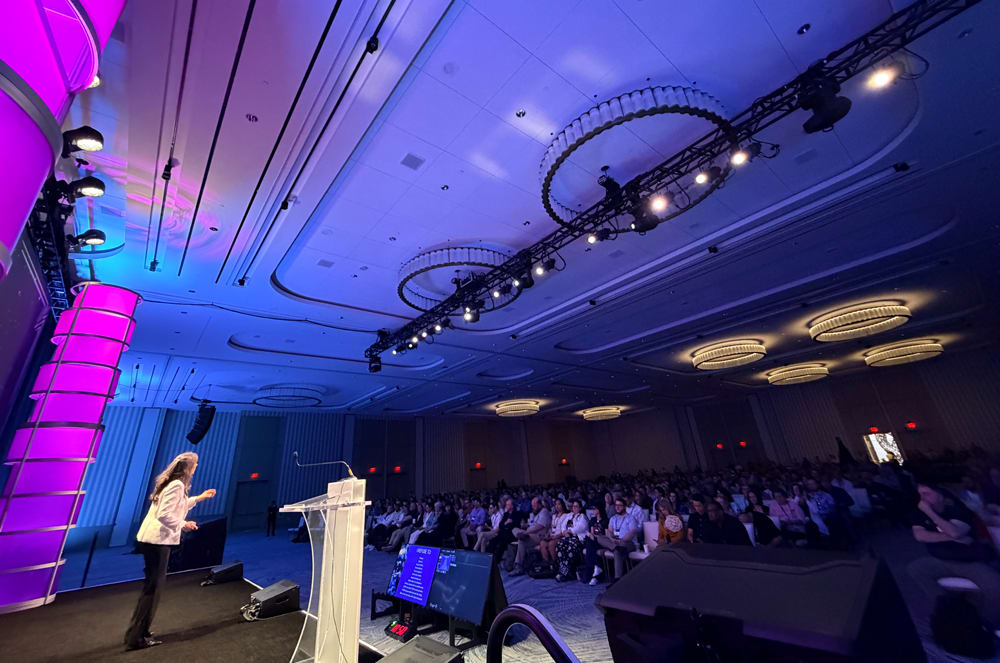
Marcus sat at his desk thinking about his upcoming presentation, a blank document open on his computer and two hours gone with nothing to show for it. The problem wasn’t lack of knowledge—it was that he’d started with the wrong approach.
Have you ever stared at a blinking cursor, wondering where to start your next speech? You’re not alone. Even experienced speakers can hit that wall, and the reason is almost always the same: They sat down to write before doing the work that actually makes the writing task easier.
Whether you’re preparing a Toastmasters club speech or a major presentation at work, here are some powerful steps great speakers take before they start writing—and why they make all the difference.
Start With Your Audience, Not Yourself
The most common mistake speakers make is beginning with what they want to say. But the first question you should ask yourself isn’t What do I want to share? It’s Who is my audience, and what do they need from me?
While preparing for a keynote speech to a group of school administrators, I spoke with the event organizer and several attendees—people caught between the demands of parents, students, teachers, and the board. I wove examples of those realities into the talk, and afterward one woman rushed up to me with a huge smile, saying, “That was so relevant—it was like you totally got what I face day to day. What an encouragement!” It landed so well because she felt like I understood her world. Gaining information and insight beforehand paid off.
Sheryl Roush, DTM, AS, of the Professional Speakers and AS We Speak online clubs, uses a powerful preparation technique: “I ask a lot of questions, get to know who the listeners will be, and tailor everything to them, their immediate takeaways, and their ideal outcomes.” She then takes it one step further, visualizing the audience not from the stage but as if seated among them, experiencing the talk from their perspective.
When planning your speech, ask a few fellow members or colleagues what they find most challenging about your topic. Find out what’s keeping them up at night, and start from there.
From Information to Inspiration
Once you understand your audience, the question becomes: What will actually move them? Ask yourself: Why does this matter for this audience? What do I want them to do differently? And what will motivate them to actually do it?
Miss any one of those three elements, and your speech may be interesting, but it won’t change anyone’s behavior. Your intention is to help your audience walk away with something they can feel inspired by and act on.
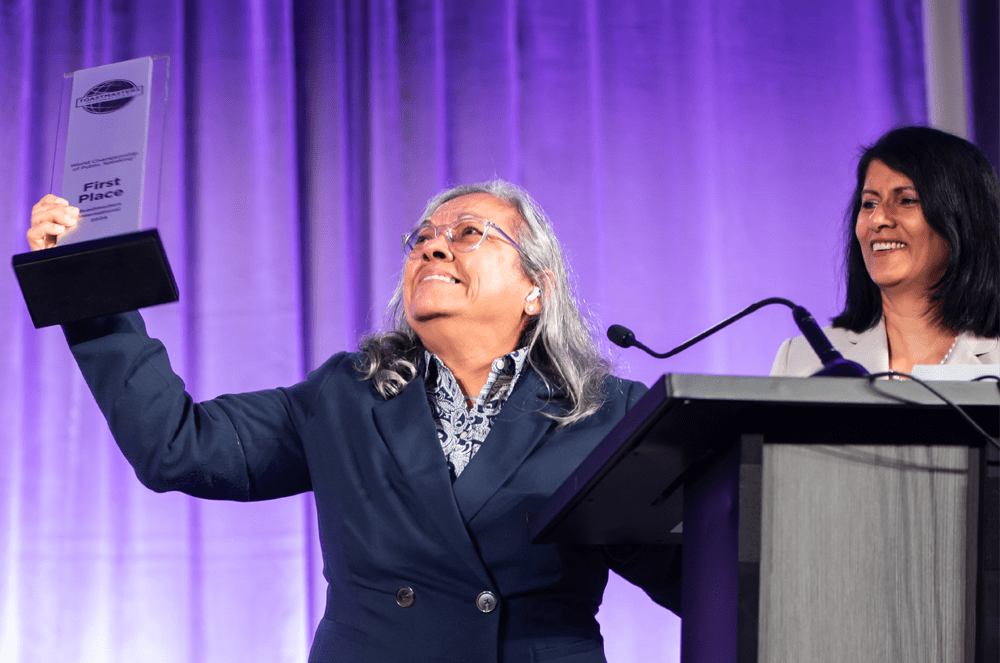
Before every speech, 2024 World Champion of Public Speaking Luisa Montalvo, of Montalvo Toastmasters in Pharr, Texas, reflects on whether someone recently taught her something she thought she already knew, or gave her a fresh perspective that shifted how she saw things. “My goal is usually to have my audience laugh, cry, and send them home with a message,” she says. “I want to give them the WOW factor—something they’ve never seen or heard before.”
This is what closing the knowledge-action gap looks like. Your job as a speaker is to find the story that finally makes a point stick and lodges in the audience’s memory long after the applause has faded.





Build Your Foundation With Research
Before you write, cast a wide net.
“Research. That’s my key activity,” says Maureen Zappala, DTM, AS, a member of Henderson Toasters in Henderson, Nevada. “Data, facts, dates, tidbits of information about the audience, their industry, their world. I won’t use all of the information I gather, but I certainly will have a good foundation.” A strong research foundation allows you to write—and speak—with authority and credibility.
"My goal is usually to have my audience laugh, cry, and send them home with a message."
—Luisa MontalvoA well-chosen statistic can also be a compelling hook. Imagine putting the number “63” on a slide and asking your audience what it represents—then revealing the finding from Chip and Dan Heath’s Made to Stick book: 63% of people remembered the stories from a presentation, while only 5% remembered any statistic. Used well, data adds intrigue. But make sure you get it right: An inaccurate fact undermines everything you’re trying to build.
Create a Story Bank
The most powerful speeches paint pictures and take people on a journey they won’t forget. Gathering stories and metaphors before you write is just as important as gathering facts.
Freddi Dogterom, DTM, AS, of the Dynamically Speaking Club in Lethbridge, Alberta, Canada, has a simple but brilliant system. Before speaking, she revisits photos, such as those from her time living north of the Arctic Circle—ice highways, vast tundra, a close encounter with a polar bear—to relive the moment before she writes about it. “I keep a photo log with my story file so I can be accurate and ‘see’ the story unfolding in my mind as I recount it,” she says.
Start building your own story bank. Whether it’s a folder of photos, a note on your phone, or a dedicated notebook, the habit of capturing potential stories means you’ll never be stuck for the right example when you need it most.
Map Your Speech First
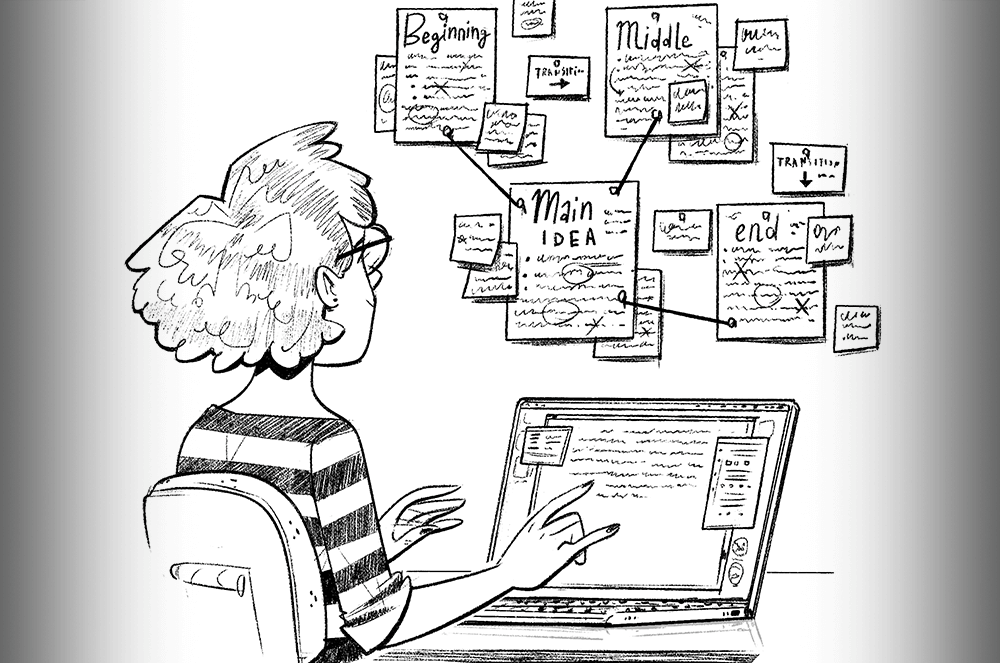
Before drafting a single line, understand your speech at a high level. Past International President Dilip Abayasekara, DTM, AS, of Conestoga Toastmasters in Lancaster, Pennsylvania, and four other clubs, has used mind mapping (a technique where you visually organize your ideas, words, or topics, linking them around a central subject or message) to prepare every speech since 1994, including both rounds of his Accredited Speaker presentations. “I rarely write out a speech word for word,” he says. “I mind map it.”
Whether it’s a mind map, a simple outline, or key points jotted on paper, having a clear structure before you write frees you to focus on the words later.
Let It Percolate
There’s no fixed timeline for preparing a speech.
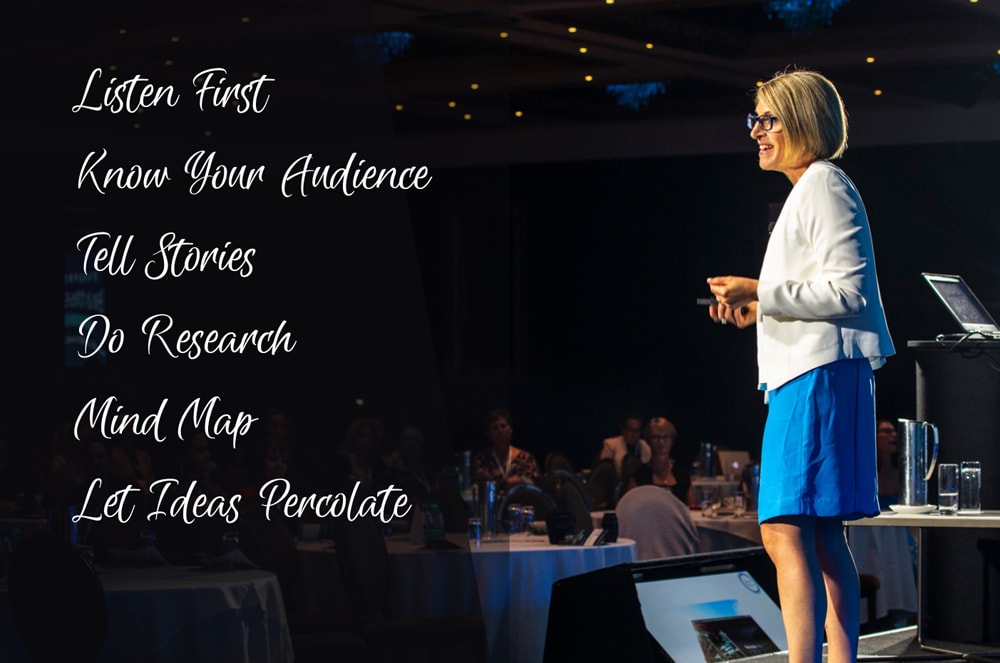
Twenty years ago, I walked into my first Exercise New Zealand Conference as a beginning exercise instructor. Last year, in a full-circle moment, I was invited to deliver the opening keynote to 750 of my peers at the same conference. I felt the weight of speaking to that particular audience and really wanted to deliver for them.
With eight months of preparation time, I took my time fleshing out my core message. I started a note on my phone, adding ideas whenever they surfaced over many months. When I stepped onstage, the final speech included a story from a movie I’d seen that year, a joke from a friend, and an interactive experience.
Even if you only have a few days before your next speech, jotting ideas as they come can spark something you’d never have thought of sitting at a desk. Use a running note on your phone, a voice memo, a notebook by your bed. Let the message develop. You might be surprised what rises to the surface.
You may never feel completely ready, and that’s entirely normal. At some point, you simply have to begin.
The next time you’re assigned a speech—whether it’s your next club project or a work presentation—resist the urge to immediately write your opening line.
Start instead with your audience. Sit with their challenges. Reflect on what they truly need. Gather your stories, stats, and ideas. Let those ideas breathe. Then, when you finally sit down, you’ll find the words come far more easily than you expected. And your audience? They’ll feel the difference.

Share this article


Lauren Parsons, DTM, AS is an award-winning wellbeing specialist, New Zealand’s Keynote Speaker of the Year and Educator of the Year 2023, TEDx speaker, author of Thriving Leaders, Thriving Teams, and host of the Thrive TV Show. She is a sought-after speaker who helps organizations create a positive, energized team culture where people thrive. Visit laurenparsonswellbeing.com.
 Previous Article
Related Articles
Speechwriting
5 Simple Tips to Better Speechwriting

Speechwriting
10 Ways to be a Better Speechwriter

Presentation Skills