

 Previous
For many of us, “back to school” conjures up memories of sharpened pencils and chalkboard dust. With many students heading off to school this time of year, it’s a season for beginnings and new experiences—and what better place to dive in than a college or university Toastmasters club?
There are currently 365 Toastmasters clubs affiliated with colleges and universities in 47 different countries. In some of these clubs, membership consists of students, faculty, and staff only, but many are open to alumni and the general public as well.
Whether you’re completing coursework, preparing for a job interview, or looking to connect across generations, these campus clubs are a great way to continue your education, even if it’s been years since you were a student.
Homework Helper
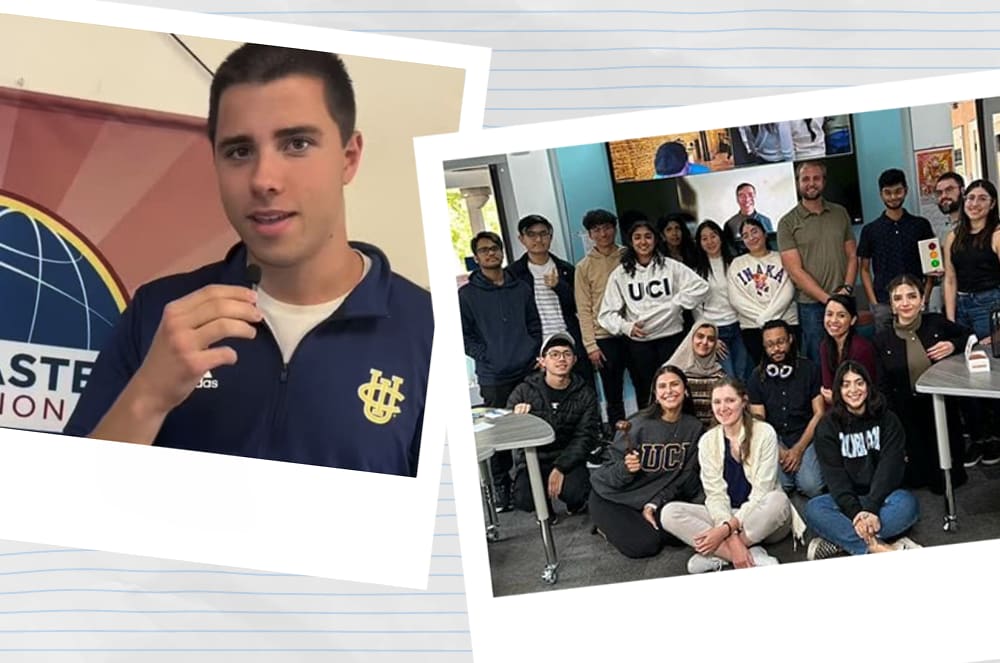
One such campus club is the ZotSpeak Club at the University of California, Irvine (UCI). Founded in 1998 by Bob Hudack, DTM, the club was initially composed entirely of staff members.
“Now it is mostly students of various [academic] majors,” along with staff, alumni, and university retirees like himself, says Hudack. Members of all ages find benefit in the club.
Member Kyle Sheehan is a third-year history major. “Initially, I saw [Toastmasters] as an investment in the future, but as I got to go to more meetings and practice my speeches, I found that it helped with whatever I was doing in college at the moment,” he says.
Sheehan has been able to put his experience in Toastmasters to immediate use. “I feel like it gives me a one-up in class whenever I have to give a presentation,” he notes.
But the advantages aren’t limited to assignments. At club meetings, “you’re always thinking about [communication], whether you’re the one presenting or you’re in the audience,” and that has changed the way he experiences classes. “I’m much more observant … of how the professor is presenting the course material,” says Sheehan. “A lot of the skills I learned in Toastmasters I use in lecture halls and discussion classes.”
Acing the Interview
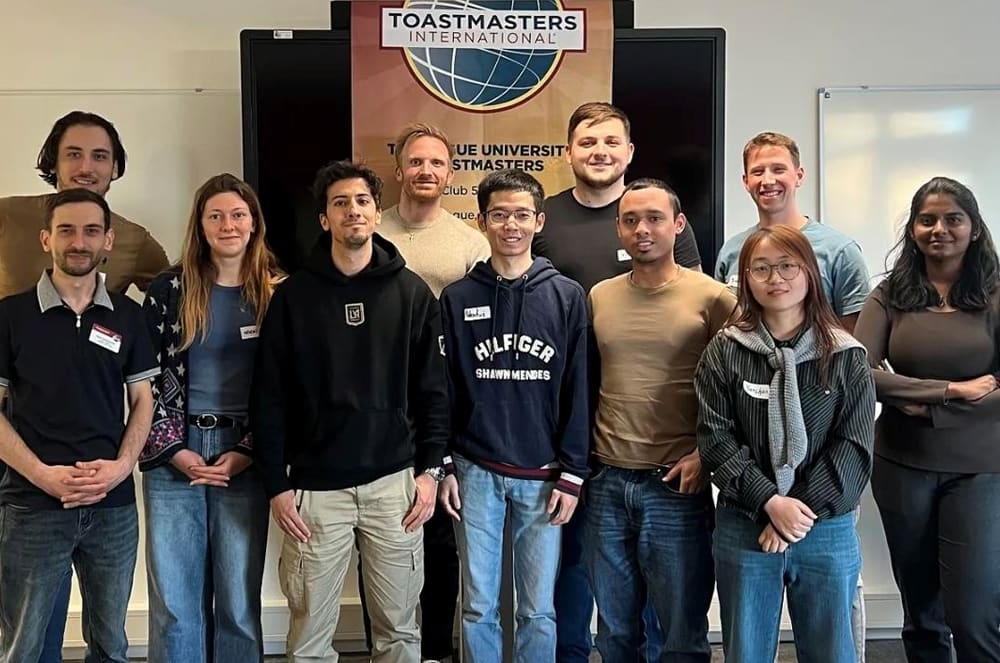
Laszlo Walburg attends a campus club in the Netherlands. He had already completed his university education, and joined The Hague University Toastmasters (HUT) while job-hunting earlier this year. During the interview process for a promising position, the company “told me that the job itself would be a good fit, but they also give presentations to clients, and they [envisioned] me doing that role as well. But I knew from my past that whenever I had to do a presentation, I got hit with these crazy nerves,” says Walburg. He decided to join Toastmasters.
"I fell in love with the people, the place, and the university itself."
—Laszlo WalburgWalburg lives near the university, and as he was trying out different clubs, he happened upon HUT. The fact that the club meets on campus is a major draw. “The location makes it more of a learning environment,” he says. “You walk into the university with the idea that you’re doing something [where you] will either teach or learn. I’m an energy person, so that really helps me.”
He also likes the laid-back vibe and the fact that members come from “all walks of life”—students, entrepreneurs, and professionals; people from Egypt, Argentina, and China. A variety of speeches stem from that diversity. “I fell in love with the people, the place, and the university itself,” says Walburg.
As for the job interview that originally spurred him to join the club? “I had the second job interview, and I told them that I [had joined] Toastmasters. They were like, ‘Oh, that’s pretty proactive of you.’” He got the job.
Connection and Continuity
Despite being retired from UCI, where he had worked in the IT department, Hudack keeps coming back to the Southern California campus for the things he learns at the ZotSpeak Club. “I stay in Toastmasters because I hear a variety of presentations and topics that never would have occurred to me,” he says. “Someone will give a presentation about their studies, or things that are important to them.” He enjoys connecting across generations.
That cross-generational connection can help smooth out some unique hurdles that university clubs face. Member turnover can be high among students, especially on campuses where school schedules change quarterly. “If there is a required course that happens during the [club] meeting time,” Hudack says, “the member drops out, understandably.”
There is also the problem of attrition, shrinking the club’s membership numbers. “I think it’s difficult once people graduate,” Sheehan says. “We do offer a hybrid format, so that’s very convenient, but people move on and go on their own career path.” Having members from all stages of life, whose schedules are more stable, can help provide continuity.
 The ZotSpeak Club at the University of California, Irvine
This stability and continuity is important not only at the club level, but at the organizational level as well, says Phebe Pendon, DTM, of Manila, Philippines. Pendon, a club coach for the UP Manila Club at the University of the Philippines Manila, is passionate about helping students succeed and about building connections between older and younger Toastmasters.
“A lot of the skills I learned in Toastmasters I use in lecture halls and discussion classes.”
—Kyle Sheehan“I think there is a need to reach out to the young generation so that there will be a merging of membership,” she says. “Senior members can address the needs of the new ones and build them up” so they are ready to become the next generation of club leaders. This continuity and transfer of knowledge will help Toastmasters provide learning opportunities far into the future.
Educational Journey
From the younger generation to the older, from first-year college students to professionals, from brand-new Toastmasters who haven’t done their Ice Breakers to seasoned DTMs, there’s a place for everyone in college and university clubs. A school setting might be just the sort of environment you need to continue your lifelong learning.

Share this article


Megan Preston Meyer is the author of Max Entropy & the Avalanche, as well as Firebrand: A Corporate Elements Mystery and the Supply Jane and Fifo Adventures. She lives in Switzerland and is a regular contributor to the Toastmaster magazine. Learn more at entropycottage.com/max.
 Previous Article