


 Previous
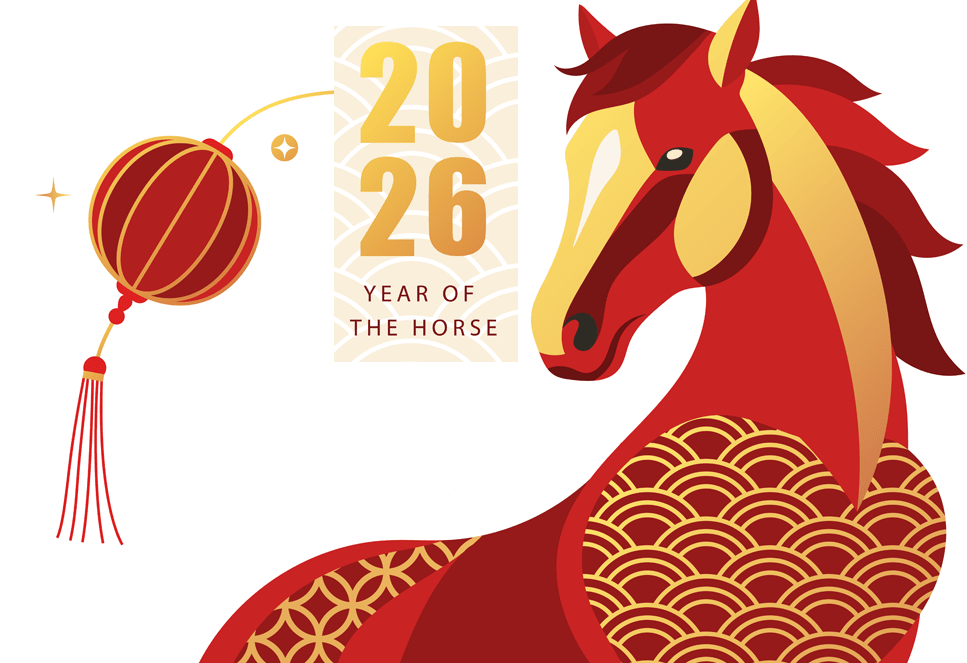
Chinese New Year begins on February 17, 2026, and welcomes the Year of the Horse. The Spring Festival also begins on the New Year, and celebrations last more than two weeks.
In China, the New Year is a public holiday and a time for families to gather. People typically have about a week off from work, so families are able to travel to one another and celebrate. It is believed that what you do to begin the new year will play a role in your luck for the coming year.
To usher in good luck, people say, “Happy New Year,” or “Xīnnián kuàilè,” and give well wishes as the clock strikes midnight, as well as red envelopes filled with money to help cast away bad luck. The amount given never includes the number four because the pronunciation of “four” in Chinese sounds similar to the word for “death.” However, other even numbers symbolize good things coming in pairs, so the amount of money given is often an even number.
Traditions can vary across the country, but some include decorating homes with kumquat trees to symbolize wealth and good luck; wearing lucky colors, like yellow and red; and eating foods that are considered lucky—dumplings, noodles, walnut cookies, and fried flour-coated peanuts.
On the 15th day of celebrations, the Lantern Festival marks the end of the Spring Festival. This occurs on the first full moon of the new lunar year, and people light lanterns and set off fireworks. The lanterns symbolize releasing the past and welcoming the new year. During the Lantern Festival, there are also lion and dragon dances to ward off evil spirits and bring good luck to all.
Xīnnián kuàilè!

Share this article


Laura Mishkind is associate editor for the Toastmaster magazine. Reach her at lmishkind@toastmasters.org.
 Previous Article